
TRANSIT PLANS
What’s in the Approved GoTriangle Orange County Plan?
Light Rail
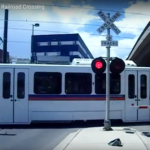
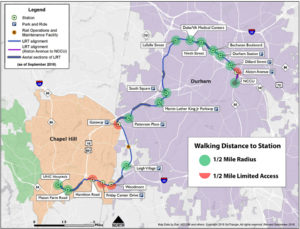 The GoTriangle Plan: The 17.7-mile Durham-Orange Light Rail Transit Project is intended to better connect people to jobs, schools and health care providers and offer a more predictable, congestion-free trip for commuters. The line will serve three of the top 10 employers in the state, directly connect three major universities and provide direct access to UNC Hospitals, Duke Hospitals, the Durham VA Medical Center and employers, services and entertainment in downtown Durham. New development around the planned light rail stations is projected to create tens of thousands of new jobs and add $175 million annually in state and local tax revenue.
Our comment: The light rail route by-passes growth areas in Chapel Hill along all our major corridors except for a portion of Route 54 East. In a congestion study performed on E 54, it was determined that Light Rail would not reduce congestion on this highway. The traffic modeling done for the “Blue Hill” (Ephesus Fordham) District demonstrated that at the most the light rail would reduce automobile traffic by 7%. There will be no reduction in traffic on other major corridors as a result of this 3.5 billion dollar investment. While the light rail connects three major universities, the route that joins them is not heavily traveled.
Bus Rapid Transit (BRT)
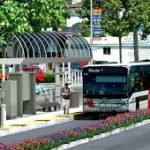 The GoTriangle Plan: The 8.2-mile North-South Bus Rapid Transit Project will run along Martin Luther King Jr. Boulevard in Chapel Hill that will connect commuters from park-and-ride lots on Eubanks Road in the north and Southern Village in the south with downtown Chapel Hill and UNC, serving one of Chapel Hill’s busiest transit corridors.
Our comment: The project is 8-10 million dollars short on funding. Last year our transit partners (Durham County and GoTriangle) out voted Orange County and put this project at the bottom of the list for state funding in order to improve their chances for light rail funding from the state. That was most unfortunate! The BRT technology has been successful and cost effective in many cities throughout the country, and provide it at a small fraction of the cost of light rail. For example, estimates have shown that Bus Rapid Transit could be deployed on all the major corridors of Carrboro and Chapel Hill for approximately one-third of the light rail project cost.
Expanded Bus Service
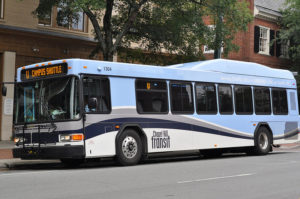 The GoTriangle Plan: GoTriangle says they have expanded Chapel Hill Transit bus service with new and replacement vehicles as part of the GoTriangle Plan.
Our comment: The real story on bus hours is that growth in the cost of Chapel Hill Transit cost of operations is absorbing the modest incremental funding provided by GoTriangle. Thus Chapel Hill Transit continues to reduce overall service coverage by making cuts on some routes while adding capacity on other routes. It’s important to understand that a recent 3000 hour addition of service is only a 1 1/2% increase in bus service. Because of the massive debt obligation taken on by GoTriangle for the light rail, no transit funds will be available until after 2062 from the transit sales tax.
Bus Stop, Bike/Pedestrian Improvements
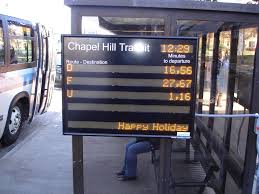 The GoTriangle Plan: Improvements to bus stops, sidewalks, bike and pedestrian connections and other transit facilities.
Hillsborough Train Station
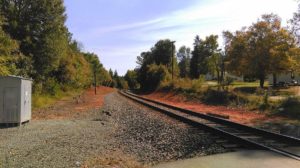 The GoTriangle Plan: An Amtrak station in Hillsborough that will connect residents of Orange County to the Piedmont rail service, which runs between Charlotte and Raleigh four times a day, and to the Carolinian service, which runs between Charlotte and New York twice a day. It will not serve local commuter needs.The $8.1 million project will be funded in part by the Town, but primarily through fixed amounts from NCDOT and GoTriangle. The Town of Hillsborough will own the station and be responsible for long-term maintenance. NCDOT will pay $7,380,000 from state-level funding, while GoTriangle’s contribution of $686,000 will be derived from the transit sales tax. Hillsborough is expected to pay $34,000, though if costly embellishments are added or costs exceed the two other fixed contributions, the Town must cover the remaining balance.
Our comment: This is a great contribution to regional travel, but does not relate to or is it connected to the rail route in Orange and Durham counties.
Commuter Rail
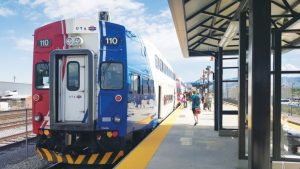 The GoTriangle Plan: Commuter Rail Transit (CRT) will use existing railroad tracks to provide comfortable passenger service that allows riders to relax or work on their way to key destinations. The line would run 37 miles from Garner to downtown Raleigh, N.C. State University, Cary, Morrisville and the Research Triangle Park continuing to Durham. The plan calls for:
- Providing up to eight trips in each direction during peak hours.
- Running one to two trips each way during midday and evening hours.
- Leveraging the bus network to connect riders with key destinations such as RDU Airport.
Our comment: The commuter rail is far less expensive than the light rail because it uses existing infrastructure. In 2015, Raleigh and Wake County revisited the light rail plan and decided it was too expensive and developed a more practical plan emphasizing bus and commuter rail.
Links to Expand Your Knowledge of GoTriangle’s Transit Plan
- View video on North-South MLK Bus Rapid Transit Project
- GoTriangle Durham Orange Light Rail Flyover
- Simpsons
- Zoom in map of proposed rail project route in Chapel Hill (Use arrows in left hand corner to see details)
- Where do UNC Employees and Students Live?
Letters, Speeches, and Documents
- Davenport Independent Financial Review, April 4 Orange County Agenda
- 2.16 Letter from Federal Transit Administration to Gotriangle
- 3.08 Earl McKee questions Gotriangle’s financing plans
- 2.16 Letter from Federal Transit Administration to Gotriangle
- County Commissioners Consider Davenport Financial Information, April 4
- Key Pages from Davenport Analysis
- Memo re Bus Hours, Craig Benedict
- Speeches to County Commissioners, March 7, 2017
- Speeches to County Commissioners, April 4, 2017
- Presentation to Town Council by CHALT (PDF)
- Asking the Hard Questions, Professors Evaluate DOLRT, December 2016
- Chapel Hill Transit Report, January 2015 A Town consultant reveals the state of Chapel Hill Transit and serious deficiencies that need to be addressed.
- Fostering A Pedestrian-Friendly Urban World December 20, 2012. How could the creation of more pedestrian-friendly urban environments help American cities thrive and grow in the 21st Century?
- BRT Congestion Study: What mode of transport do you prefer on MLK in Chapel Hill? Study of Chapel Hill attitudes began in 2013.


Follow Us